

When Nykaa launched its IPO in November 2021, it became one of India’s most talked‑about equity offerings. Investors, retail and institutional alike, clamoured for a piece of what seemed like the country’s next big consumer franchise in beauty, personal care and lifestyle retail. Years on, the company’s share price journey has been anything but straightforward. From a highly celebrated debut to a challenging post‑IPO performance and then a spirited recent comeback, Nykaa’s market story holds lessons for long‑term investors and market enthusiasts alike.
In this detailed review, we’ll unpack Nykaa’s IPO, examine how its stock has performed since listing, explore financial results and market reactions, discuss expert outlooks, and help you understand what this all means for current and potential investors.
Read Also: Nykaa Stock News Key Factors Impacting Share Price Today
What Made the Nykaa IPO Special?
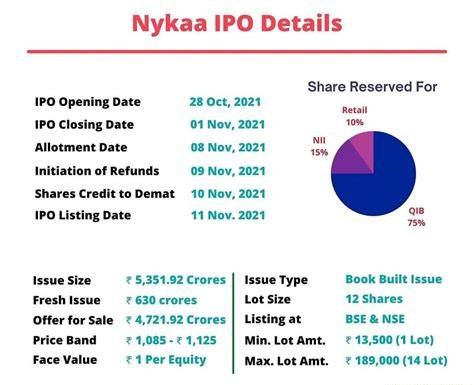
When Nykaa went public in late 2021, it was heralded as a landmark moment for Indian startups. With a price band set between ₹1,085 and ₹1,125 per share, the offering was met with overwhelming investor interest — it was reportedly subscribed 82 times overall, with strong participation across retail, institutional and high‑net‑worth segments.
The premium valuation wasn’t just a number; it symbolized confidence in a company that had carved out a strong online presence, built a loyal customer base, and expanded rapidly into offline retail formats. For many retail investors, Nykaa represented a chance to own equity in a consumer brand they personally used and admired.
Stock Listing Debut and Early Performance
On its first day of trading, Nykaa’s shares opened at a significant premium compared to the IPO price and quickly drew headlines. Listing gains of nearly 80% above the IPO price were widely covered, signaling strong market enthusiasm at the outset.
Yet, despite this strong debut, the honeymoon period was short‑lived. In the months and years that followed, Nykaa’s share price trajectory diverged significantly from initial expectations. Various factors contributed to this shift — broader market conditions, evolving investor preferences, and internal company performance dynamics.
Post‑IPO Reality: Volatility and Valuation Pressure
A Period of Correction
Although Nykaa started strong, the stock experienced headwinds not long after listing. Supply of shares post‑lock‑in and rising concerns over valuation metrics led to downward pressure on the share price. At times, the stock even traded below the IPO issue price, reflecting cooling sentiment among some investor segments.
This dip wasn’t unique to Nykaa — many high‑profile tech and consumer IPOs around the same period saw similar trends as markets recalibrated expectations for growth, profitability and sustainability in the post‑pandemic economic environment.
Long‑Term Underperformance from Listing Levels
Looking beyond short‑term volatility, data from stock‑tracking platforms shows that Nykaa’s stock has underperformed when measured directly against its IPO listing price over the long run. At one point, shares were reported to be down around 80% from their IPO listing levels, indicating significant value erosion for early public market investors.
It’s important to note that stocks can lag their listing price for numerous reasons, and this doesn’t necessarily reflect a fundamental failure — but it does highlight the risks of buying at peak valuations.
Stock Price Trends: Annual Performance Snapshot
Historical price data gives context to how the market has valued Nykaa over time. According to recent compiled metrics:
- 2021: Weak performance post‑listing
- 2022: Sharp decline, retracing significant gains
- 2023: Modest rebound
- 2024: Slight dip
- 2025: Strong positive performance, with returns over 60% in the year
- 2026: More muted or slightly negative returns so far
These trends illustrate a classic story of volatility — early promise, significant correction, and a later recovery phase as investors reassess company prospects.
What’s Driving the Recent Stock Recovery?
In 2025 especially, Nykaa’s stock saw a meaningful rally. From lows in early 2025, shares climbed significantly, marking a 76% rally to multi‑year highs compared to the March 2025 trough.
This uptrend is rooted in renewed investor confidence, stronger financial performance and a more favorable market narrative. Quarterly earnings reporting solid revenue growth, expanding margins, and profitability improvements have helped rebuild trust in the company’s growth story.
Financial Performance: Revenue, Profit and Growth Drivers
Consistent Revenue Growth
Nykaa’s revenue trajectory continues to impress. In the fiscal year ending March 31, 2025, the company reported consolidated revenue of nearly ₹7,950 crore — a year‑on‑year increase of roughly 24%. That reflects sustained demand for beauty and personal care products, as well as the success of omnichannel strategies.
Profitability Trends
Profitability has also improved. Net consolidated profit more than doubled in FY25 compared to FY24, and EBITDA margins expanded, signaling operational efficiencies and better cost management.
Quarter‑to‑quarter results have shown similar momentum, with net profit surging by double‑digit percentages and margins in key segments like beauty and personal care (BPC) holding firm.
Segment Performance
Nykaa’s core strength lies in its beauty and personal care category, which remains the largest revenue contributor and the most consistent driver of margins. The fashion segment, while growing, has historically exhibited lower profitability — an ongoing focus area for improvement.
What Analysts Are Saying Now
Market analysts today largely agree that Nykaa’s core business shows resilience, but views differ on valuation and near‑term upside.
Nomura describes Nykaa’s performance as steady, noting improved margins and stable results, but raised concerns that valuations already reflect much of the expected growth.
JM Financial has taken a more bullish stance, highlighting fashion‑related improvements and setting higher target prices.
The mixed analyst landscape reflects broader uncertainty among investors — not over Nykaa’s potential, but over whether the current stock price offers significant upside or is fairly priced given growth expectations.
Comparing Nykaa with the Broader Market
Nykaa’s stock journey mirrors broader themes in the Indian equity markets, particularly among consumer‑tech and retail IPO stories. Some peers, like Zomato, experienced early volatility followed by recovery driven by clear profitability paths.
The difference? Investors increasingly reward companies that not only grow fast but can also demonstrate scalable, sustainable earnings power.
Investor Takeaways: Lessons from Nykaa’s Public Market Journey
Valuation Matters
High initial valuations can amplify downside risk, especially if growth slows or expectations shift. Nykaa’s story underscores the importance of assessing IPO pricing relative to long‑term fundamentals.
Look Beyond the Listing Pop
Early listing gains can be exciting, but long‑term investment returns depend on consistent execution and financial discipline.
Diversification Is Key
Even well‑known consumer brands can fluctuate wildly in public markets. A diversified portfolio can help smooth the risk intrinsic to single‑stock exposure.
Long‑Term Trends Still Favor Consumption
India’s beauty, personal care and lifestyle consumption markets continue to grow. Companies with strong brands and omnichannel reach are well‑positioned, though success isn’t guaranteed.
Conclusion
Nykaa’s IPO was a milestone for Indian markets — a breakthrough moment for consumer internet companies and female‑led unicorns alike. Since then, its stock performance has reflected both the exuberance of a hot IPO and the sobering reality of public market valuation discipline.Today, Nykaa sits in a more mature phase of its public life. It has weathered volatility, delivered consistent revenue and profit growth, and earned renewed investor interest as a stock with compelling fundamentals.